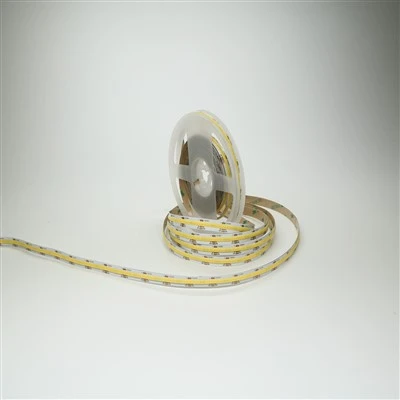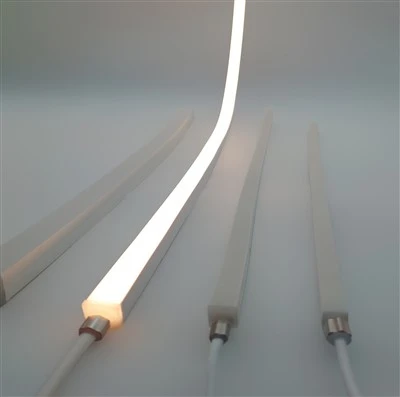
LED light strip controllers are electronic devices used to control the brightness and color patterns of LED light strips. They are primarily used in advertising signs, decorative lighting, and other fields. They are categorized by circuit design: high-power controllers and serial controllers.
High-power controllers are suitable for low-voltage 12V-36V LED light strips and utilize MOS power transistors. 12V models offer an output current of 8A per channel, while 24-36V models offer an output current of 5A per channel. They require a low-voltage power supply and have a simple structure but a high current load. They are primarily used in small-scale applications such as text signs. Serial controllers use serial signals to achieve multi-channel control. For example, the NE040S supports 4096Kbit memory and manages a 512-unit LED light bank via four control lines. These controllers require configuration register support on the light source board. Both types of controllers use a common anode connection and utilize negative-pole dimming.
Low-voltage LED products are generally designed for voltages between 12V and 36V. Each circuit has 3-6 LEDs connected in series. Resistors are used to reduce the voltage and limit the current, keeping the current per circuit below 20mA. An LED product consists of multiple LED circuits. Its advantages are low voltage, simple structure, and ease of design. However, its disadvantage is that large-scale products draw high currents, requiring a low-voltage switching power supply. Due to these limitations, low voltage cannot be transmitted over long distances and is therefore limited to small products such as signage and small graphics. Based on these characteristics, the controller design specifications are as follows: 12V circuits use 75A/30V MOS power tubes, with an output current of 8A per circuit; 24-36V circuits use 60A/50V MOS power tubes, with an output current of 5A per circuit. Users can select the number of circuits in the controller based on these specifications. For step-change circuits, choose the NE20 low-voltage series; for gradual-change circuits, choose the NE10 low-voltage series.