LED Strip Light Complete Guide: Types, Uses, Installation Tips, and Customer Selection Guide (2026)
Many homes and shops use LED strip lights in their renovations. They are thin, flexible, easy to install, and consume little power, serving as both decorated lighting and practical lighting, suitable for flats, apartments, shops, and offices.
However, most people choose strip lights based on price, easily falling into pitfalls: uneven brightness after installation, flickering after a short time, prone to damage in humid environments, and requiring repeated rework due to unsuitable length.
To buy durable, aesthetically pleasing LED strip lights that suit your space, it's crucial to understand these points: the difference between 12V and 24V voltage, the difference between SMD and COB LED chips, single-color/RGB/RGBW color matching selection, IP waterproof rating, driver controller compatibility, and heat dissipation installation details.
This most comprehensive LED strip light guide for 2026 explains all the key points in plain language, including LED strip light types, applicable scenarios, correct installation methods, common pitfalls to avoid, and local real-time pricing. Even beginners can easily understand it. I. What is an LED Light Strip?
An LED light strip is an ultra-thin, flexible light strip that can be bent easily and cut freely. It consists of miniature LED beads arranged on a circuit board and operates on low-voltage DC power, making it safer and energy-efficient.
Unlike traditional lighting fixtures, it lacks a bulky body and can be cut to any length to fit corners, ceilings, cabinets, decorative walls, and other areas that ordinary lights cannot reach. The finished lighting is clean and neat, making it a commonly used ambient and auxiliary lighting fixture in modern decoration.
In short: If you want seamless, soft, and customizable lighting effects, choosing an LED light strip is generally a good choice.
II. Main Types of LED Light Strips (Categorized by Core Selection Dimensions)
There are many types of LED light strips on the market. Don't overthink it. Choose according to your usage scenario, referring to the following categories. They are suitable for most scenarios, including homes, shops, and outdoor spaces.
1. Voltage Differentiation: 12V vs 24V LED Strips
Voltage is crucial for the uniformity of LED strip brightness. Many people experience uneven lighting, with the front brighter than the back, due to incorrect voltage selection.
12V LED Strips: Suitable for short-distance lighting, such as bedroom ceilings, kitchen cabinets, and small decorative corners. Advantages include flexible cutting, simple wiring, and high cost-effectiveness, making them suitable for small-scale home renovations. Disadvantages include voltage attenuation over longer strips, resulting in noticeable dimming at the ends.
24V LED Strips: Lower voltage loss, maintaining uniform brightness even over long distances without color differences between the beginning and end. More suitable for large-scale lighting scenarios such as extra-long living room ceilings, large storefronts, commercial display cases, and long corridors, and is also a mainstream choice for commercial decoration.
2. Light Color: Monochrome, RGB, RGBW
Monochrome LED Strips: Only offer fixed white or warm white light, available in 2700K-3000K warm light, 4000K natural light, and 6000K cool white light. Soft and stable light, prioritizing practicality and aesthetics, suitable for basic ambient lighting throughout the house, ceiling light troughs, and cabinet lighting, making it a top choice for home decoration.
RGB Colored Light Strip: Allows free switching between multiple colored lights, supports dynamic effects such as gradients and flashing, and offers high cost-effectiveness. Suitable for parties, events, trendy shop decorations, and creating an atmosphere in entertainment areas, but not suitable for everyday home main lighting.
RGBW Light Strip: In addition to colored lights, it adds a pure white light channel, allowing for both colored ambient lighting and outputting natural and comfortable everyday white light, balancing aesthetics and practicality. This is the preferred choice for apartments and boutique shops with sufficient budgets and a pursuit of high-end decoration effects.
3. Color Rendering Index (CRI): Standard CRI > 80 vs. High CRI CRI > 90+
The Color Rendering Index (CRI) represents the ability of light to reproduce the true colors of objects. The higher the value, the more natural and pleasing the colors to the eye.
Standard CRI 80 light strip: Meets the needs of basic everyday home lighting, offering high cost-effectiveness, suitable for ordinary hallways, storage rooms, and auxiliary ceiling lighting.
High CRI 90+ LED Strip: Accurate color reproduction, soft and non-glaring light, enhancing the colors of furniture, decorations, and merchandise. Ideal for retail stores, restaurants, living rooms, bedrooms, and other spaces in Singapore where aesthetics and visual comfort are paramount.
4. Waterproof Rating: Indoor Dry, Splash-proof, Outdoor Waterproof
In humid and rainy climates, choosing the correct IP waterproof rating can significantly extend the lifespan of the LED strip and prevent moisture damage.
**IP20 (Indoor Dry):** No waterproof function, suitable only for dry areas, such as living room ceilings, bedroom light troughs, and interior decorative walls. Absolutely not suitable for kitchens, bathrooms, or outdoor use.
**IP65 (Splash-proof):** Resistant to everyday splashes and moisture, suitable for damp indoor areas such as kitchens, bathrooms, and balconies.
**IP67 (Outdoor Waterproof):** Maximum waterproof and moisture-proof performance, can withstand direct rain and humid air, suitable for outdoor applications such as storefronts, building exteriors, and garden landscaping.
5. LED Bead Density and Type: SMD Standard vs. COB Seamless
**SMD LED Strips**: Traditional dot-matrix LEDs. The standard 60 LEDs/meter version offers the best value for money, suitable for ordinary home use; high-density versions (120-240 LEDs/meter) provide finer light dots. Suitable for budget-conscious users seeking basic lighting effects.
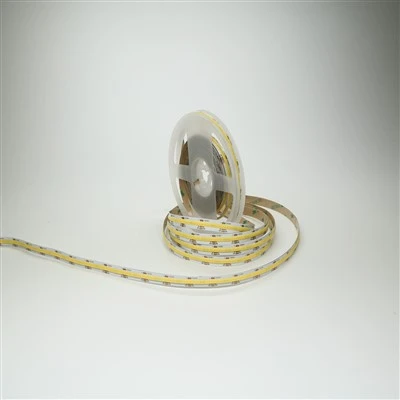
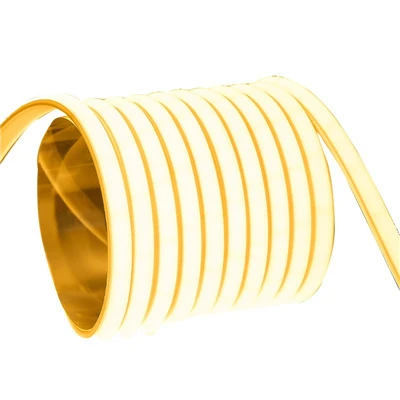
**COB LED Strips**: No particle-like light dots, providing continuous, seamless, soft, and uniform light without glare or bright spots, offering a premium feel. The top choice for high-end home décor, boutique shops, and trendy lighting designs. Priced slightly higher than standard SMD strips.
III. Correct LED Strip Installation Tutorial (Beginner's Guide)
Many LED strip malfunctions (flickering, detachment, dimming, short lifespan) are not product quality issues, but rather caused by improper installation. Following these steps will ensure your LED strip lasts for years without problems.
1. Essential Accessories, None Can Be Missing
Buying just LED strips is far from enough; a complete set ensures stable operation:
- **Power Driver**: Converts household AC power to the low-voltage DC power required by the LED strip. The power output must match the LED strip; insufficient power will cause flickering and dimming.
- **Controller**: Essential for RGB/RGBW color LED strips, used to adjust color, brightness, and lighting modes; smart models can connect to mobile phones or voice-controlled speakers.
- **Connector**: Enables seamless splicing of LED strips, avoiding messy wiring that affects aesthetics.
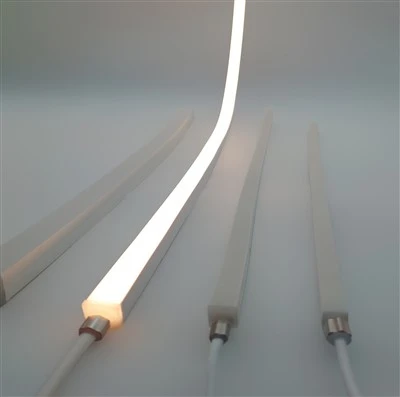
- **Aluminum Channel Profile**: A core heat dissipation component, it not only secures the LED strip and prevents it from falling off, but also provides rapid heat dissipation, significantly extending the LED strip's lifespan; a must-have for high-end installations.
2. Solving Light Attenuation (Uneven Brightness at the Beginning and End)
The longer the LED strip is laid, the more noticeable the voltage drop, and the darker the end tends to become. For short-distance installations, 12V is sufficient. For long-distance ceiling and wall lighting exceeding 5 meters, 24V LED strips are preferred. For extra-long LED strips, constant current LED strips are recommended to completely resolve the issue of uneven brightness at 10, 15, 20, and 30-meter connection lengths.
3. Key Installation Details
- Thoroughly clean the wall and ceiling surfaces before installation, ensuring they are dry and dust-free. The self-adhesive backing ensures a stronger bond and prevents detachment.
- Do not forcefully bend the light strip to avoid damaging the internal circuit board. Bend gently at corners or use a dedicated corner connector.
- Install the driver power supply in a dry, well-ventilated, and easily accessible location, away from damp areas like kitchens and bathrooms.
- After all wiring is complete, test all light segments with power to ensure there is no flicker or dark areas before securing the mounting plate.
4. Common Installation Mistakes for Beginners
Using low-power drivers, laying excessively long light strips, using ordinary indoor light strips in humid environments, omitting aluminum heat sink channels, and reversing the positive and negative terminals of the wiring can all lead to flickering, burnout, and a drastically reduced lifespan of the light strip. Planning ahead will perfectly avoid these problems.
5. For these situations, it's recommended to hire a professional installer. While simple, short-range home lighting can be DIY-enabled, for large-area commercial ceiling installations, outdoor wall lighting strips, whole-house smart lighting systems, and complex scenarios requiring rewiring, it's advisable to hire a professional installation team from Singapore to ensure safety, aesthetics, and durability.
IV. LED Strip Light Market Price Reference
Local strip light prices are affected by lamp type, density, function, and accessories, with transparent price ranges to avoid being misled by inflated prices:
- Basic 12V monochrome strip light: S$2 – S$10/meter, suitable for simple home renovations
- High-density, high CRI strip light: S$6 – S$25/meter, preferred for high-end home renovations
- COB seamless soft light strip light: S$8 – S$35/meter, for high-end renovations and shops
- RGBW color smart strip light (5-meter set): S$10 – S$60, including basic controller
Additional costs: Smart WiFi controller, aluminum channel, and waterproof accessories will incur slight price increases; installation labor costs are calculated per meter, with slightly higher prices for complex ceilings and outdoor installations.
In the long run, LED strip light has ultra-low power consumption, and with reasonable initial investment, it can save on long-term electricity costs. Furthermore, its lifespan can reach 25,000-50,000 hours, making its cost-effectiveness far superior to traditional lighting fixtures.
V. Mainstream Application Scenarios of LED Light Strips
LED light strips are highly practical and versatile, covering all scenarios from home to commercial to outdoor:
- **Home Decoration**: Living room ceiling light troughs, bedroom bedside ambient lighting, kitchen cabinet underlights, entryway hallways, stair tread lights-soft and eye-friendly, enhancing the quality of life in a home.
- **Retail Shops**: Display case supplemental lighting, shelf lighting, shop ambient lighting-high CRI light strips restore the true colors of merchandise, enhancing the sophistication of the shop.
- **Commercial & Office Decoration**: Office ceilings, conference rooms, boutique hotel rooms-uniform and non-glaring light, suitable for long hours of office work.
- **Outdoor Scenarios**: Shop fronts, building exteriors, courtyard landscaping-waterproof and moisture-proof, suitable for Singapore's rainy and humid climate.
- **Event Decoration**: Weddings, corporate events, holiday decorations-RGB dynamic lighting can create diverse atmospheres.
VI. Summary: Key Points for Beginners in Purchasing and Installing
Conclusion:
1. For short-distance home lighting, choose 12V; for long-distance, large-area lighting, prioritize 24V.
2. For everyday lighting, choose single-color LEDs with a high color rendering index; for ambient lighting, choose RGB/RGBW.
3. For kitchens, bathrooms, and outdoor use, be sure to choose LED strips with the corresponding waterproof rating to suit local humid climates.
4. For seamless, high-end lighting effects, choose COB; for budget-friendly options, choose high-density SMD.
5. Installation must include a driver and aluminum heat sink; proper installation extends lifespan.